
“Uncle Boonmee Who Can Recall His Past Lives” (2010)

yanomami.net – “Uncle Boonmee Who Can Recall His Past Lives” is a 2010 Thai drama film directed by Apichatpong Weerasethakul. This cinematic masterpiece garnered international acclaim, winning the prestigious Palme d’Or at the Cannes Film Festival. The film’s unique narrative, blending mystical realism with profound philosophical inquiry, captures the audience’s imagination, inviting them into a world where the boundaries between life and death blur.

Plot Overview

The film follows the final days of Uncle Boonmee, a man suffering from acute kidney failure, as he retreats to the Thai countryside to spend his remaining time surrounded by loved ones. What makes Boonmee’s story extraordinary is his ability to recall past lives. As he reflects on his existence, he encounters spirits, including that of his deceased wife, who has returned to care for him, and his long-lost son, who appears in a non-human form. These supernatural visitations are treated with a serene acceptance, reflecting the film’s meditative tone on life’s cyclical nature.

Themes and Symbolism

“Uncle Boonmee Who Can Recall His Past Lives” delves deep into themes of reincarnation, memory, and the interconnectedness of all beings. The film’s languid pacing and dreamlike sequences evoke a contemplative atmosphere, encouraging viewers to ponder the mysteries of existence and the afterlife. Apichatpong Weerasethakul employs a rich tapestry of Thai folklore and spiritual beliefs, crafting a narrative that resonates with universal themes of love, loss, and redemption.

Cinematic Style

Apichatpong’s direction is characterized by its lyrical style and use of long takes that allow the natural beauty of the Thai landscape to shine. The film’s visual storytelling is enhanced by its minimalist dialogue, relying heavily on imagery to convey meaning. This approach invites audiences to experience the film on an emotional and intuitive level, aligning them with Boonmee’s introspective journey.

Critical Reception

Upon its release, “Uncle Boonmee Who Can Recall His Past Lives” received widespread critical acclaim for its originality and artistic vision. Critics praised its ability to transcend conventional storytelling, offering a cinematic experience that is both challenging and rewarding. The film’s success at Cannes solidified Apichatpong Weerasethakul’s reputation as a leading figure in contemporary world cinema.

Conclusion

“Uncle Boonmee Who Can Recall His Past Lives” is a remarkable exploration of life, death, and the unseen connections that bind us all. Its contemplation of past lives and spiritual realms offers an enriching perspective on the human experience, making it a timeless piece of art that continues to inspire and provoke thought long after the credits roll.
A Historical Overview: Mandatory Haircuts in South Korea

yanomami.net – South Korea has a complex history with hair regulations, reflecting broader social and political trends. From military regulations to school policies, the country has seen various mandates on hairstyles over the years.

Military Hair Regulations

The South Korean military has long had strict guidelines on hairstyles for its personnel. For instance, noncommissioned officers in the air force are allowed to part their hair neatly or wear a crew cut, while women serving in the navy and air force must maintain a specific hairstyle that meets military standards. These regulations are part of a broader effort to maintain discipline and uniformity within the military ranks.

The Minor Offenses Act of 1973

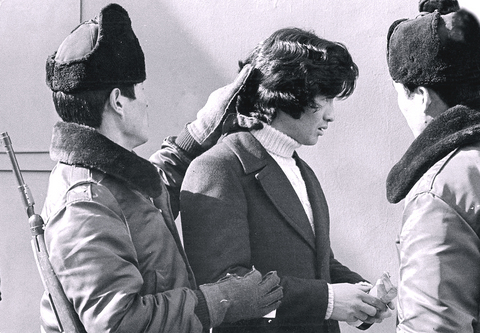
One of the most notable instances of hair regulation in South Korea was the introduction of the Minor Offenses Act in 1973 under the authoritarian rule of Park Chung-hee. This act mandated limits on the length of men’s hair and the length of women’s miniskirts. Men with long hair were often taken to police stations and forced to get haircuts, reflecting the government’s desire to control public appearance and behavior.

School Policies on Hairstyles

In more recent years, the issue of hair regulations has resurfaced in South Korean schools. Many middle and high schools ban colored or permed hairstyles, sometimes even taking away school credits for violations. This has led to debates about the infringement on students’ basic rights to self-expression. The National Human Rights Commission of Korea has recommended that schools revise their hair dress code policies to respect students’ freedom and rights to reveal their personality.

Conclusion

The history of mandatory haircuts in South Korea illustrates the country’s evolving attitudes towards personal freedom and social control. From the strict regulations of the past to the ongoing debates in schools today, hair has been a significant aspect of social and political life in South Korea. As the country continues to develop, it remains to be seen how these policies will evolve to balance tradition with individual rights.

Croatia: A Historical Overview from Prehistory to the Present

yanomami.net – The territory of modern-day Croatia has been inhabited since prehistoric times. The Starčevo culture, dating back to around 6000 BCE, is one of the earliest Neolithic cultures in Europe, with archaeological findings indicating the presence of early agricultural communities. The Vinča culture, which followed, left behind impressive artifacts and evidence of advanced social organization.

Ancient Civilizations and Roman Influence

By the 1st millennium BCE, Illyrian tribes inhabited the region. The most notable among them were the Liburnians, who were renowned for their naval skills and played a significant role in the Adriatic trade. The Greeks established colonies along the coast, such as Issa (modern-day Vis), in the 4th century BCE.

The Roman Republic conquered the region in the 2nd century BCE, and it became part of the Roman province of Illyricum. Roman rule brought significant urban development, as evidenced by the ruins of Salona (near modern-day Split) and the amphitheater in Pula, known as the Arena.

The Middle Ages: Slavic Settlements and the Croatian Kingdom

The 7th century saw the arrival of Slavic tribes, who settled in the region and assimilated the remaining Roman and Illyrian populations. The Croats, a Slavic people, established principalities that eventually coalesced into the Kingdom of Croatia in the early 10th century.

In 925, Tomislav was crowned the first King of Croatia, and under his rule, Croatia reached its medieval zenith. The kingdom maintained a degree of independence until the early 12th century when it entered a personal union with the Kingdom of Hungary.

The Age of the Republic of Venice and the Ottoman Empire

The coastal regions of Croatia came under the influence of the Republic of Venice, which controlled much of the Adriatic coast for centuries. Meanwhile, the interior faced invasions by the Ottoman Empire, particularly in the 15th and 16th centuries. The Ottoman conquests led to significant demographic and cultural changes, as well as the construction of numerous fortresses and fortifications.

Habsburg Rule and the Struggle for National Identity

In the late 17th and 18th centuries, the Habsburg Monarchy expanded its control over Croatian lands, which became part of the Austro-Hungarian Empire. The 19th century was marked by a national revival, with a focus on language, culture, and the fight for political autonomy.

World Wars and the Creation of Yugoslavia

Croatia was a battleground during both World Wars. After World War I, the Austro-Hungarian Empire collapsed, and Croatia became part of the Kingdom of Serbs, Croats, and Slovenes, later renamed Yugoslavia. During World War II, Croatia was a puppet state of Nazi Germany, known as the Independent State of Croatia (NDH).

Socialist Yugoslavia and the Road to Independence

After World War II, Croatia was one of the six republics of the Socialist Federal Republic of Yugoslavia, led by Josip Broz Tito. The 1970s and 1980s saw a rise in nationalism, leading to the Croatian Spring, a movement for greater autonomy.

Independence and Modern Croatia

Croatia declared independence from Yugoslavia in 1991, which led to the Croatian War of Independence. After several years of conflict, Croatia gained international recognition and became a member of the United Nations in 1992.

In the 21st century, Croatia has focused on European integration. It joined NATO in 2009 and the European Union in 2013. Today, Croatia is a parliamentary democracy and a member of the eurozone, continuing to develop its economy and strengthen its position on the international stage.