Darth Vader: The Dark Lord of the Sith

yanomami.net – Darth Vader, one of the most iconic characters in cinematic history, is known as the Dark Lord of the Sith. His presence in the “Star Wars” universe is both formidable and tragic, embodying the complex journey from hero to villain. This article explores the evolution of Darth Vader, his impact on the galaxy far, far away, and his lasting legacy in popular culture.

Anakin Skywalker: The Rise of a Jedi

Before becoming Darth Vader, he was Anakin Skywalker, a Jedi Knight with exceptional skills and a promising future. Discovered by Jedi Master Qui-Gon Jinn on the desert planet of Tatooine, Anakin was believed to be the Chosen One destined to bring balance to the Force. His journey began with hope and ambition, training under Obi-Wan Kenobi and rising through the ranks of the Jedi Order.

The Fall to Darkness

Anakin’s transformation into Darth Vader is marked by tragedy and manipulation. Haunted by visions of his loved ones’ deaths and driven by a desire to save them, Anakin became susceptible to the dark whispers of Emperor Palpatine. The Sith Lord exploited Anakin’s fears, leading him to embrace the dark side of the Force. This pivotal moment, marked by the infamous battle on Mustafar against Obi-Wan, sealed Anakin’s fate as Darth Vader.

The Reign of Terror

As Darth Vader, he became the Emperor’s enforcer, instilling fear across the galaxy. Clad in black armor and wielding a red lightsaber, Vader’s presence was both commanding and terrifying. He ruthlessly hunted down the remaining Jedi and crushed rebellions, ensuring the Empire’s dominance. Yet, beneath the armor lay the remnants of Anakin Skywalker, conflicted by his past and the choices he made.

Redemption and Legacy

Darth Vader’s story culminates in a powerful arc of redemption. In “Return of the Jedi,” he is confronted by his son, Luke Skywalker, who believes there is still good in him. This belief ultimately leads to Vader’s redemption when he turns against the Emperor to save Luke, fulfilling the prophecy of the Chosen One by bringing balance to the Force.

Conclusion

Darth Vader remains a symbol of the complex interplay between light and dark, good and evil. His journey from Anakin Skywalker to Darth Vader and back to Anakin is a timeless tale of redemption and the enduring power of hope. As a character, he continues to captivate audiences, leaving an indelible mark on the “Star Wars” saga and popular culture as a whole.
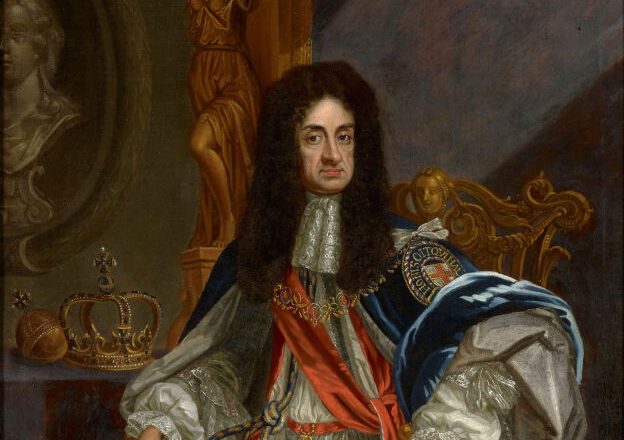
The Merry Monarch and His Turbulent Reign: King Charles II

yanomami.net – King Charles II, often referred to as the “Merry Monarch,” reigned over England, Scotland, and Ireland from 1660 until his death in 1685. His reign, known as the Restoration Period, was marked by a stark contrast to the Puritan austerity that had prevailed during the Commonwealth era under Oliver Cromwell. Charles II’s life was a tumultuous journey through exile, restoration, and the challenges of ruling a nation divided by religious and political strife.

Early Life and Exile

Charles II was born on May 29, 1630, at St. James’s Palace in London. He was the eldest surviving son of King Charles I and Henrietta Maria of France. His early life was marked by the political turmoil that led to the English Civil War. Following the execution of his father in 1649, Charles II was proclaimed king by the Scottish Parliament but was forced into exile in France and the Netherlands. His attempts to regain the English throne were met with failure, culminating in his defeat at the Battle of Worcester in 1651, after which he fled to France.

The Restoration and Its Consequences

The Restoration of the monarchy in 1660 was a turning point for Charles II. He returned to England on May 29, 1660, his 30th birthday, to a warm reception from his subjects. His reign was characterized by a return to the arts, the reopening of theaters, and a general relaxation of the strict moral codes that had been enforced during the Commonwealth. However, this period of relative peace was marred by the Great Plague of 1665 and the Great Fire of London in 1666, which devastated large parts of the capital.

The Merry Monarch’s Court

Charles II’s court was known for its lavishness and moral laxity, earning him the nickname “The Merry Monarch.” He was a patron of the arts and sciences, and his reign saw a flourishing of literature, music, and architecture. However, his personal life was marked by numerous mistresses and illegitimate children, which contrasted sharply with his public image as a benevolent and affable ruler.

Political Challenges and Religious Tensions

Despite his popularity, Charles II faced significant political and religious challenges. His attempts to introduce religious tolerance, particularly for Catholics and Protestant dissenters, were met with resistance from Parliament. The Popish Plot of 1678, which falsely accused his Catholic brother, James, Duke of York, of plotting to assassinate Charles and replace him with a Catholic monarch, further polarized the nation.

Legacy and Succession

Charles II died on February 6, 1685, without legitimate heirs. His reign had been a period of significant change and cultural revival, but it also left unresolved issues of religious and political tension. His successor, James II, was a Catholic, which led to further conflict and eventually the Glorious Revolution of 1688, which saw the overthrow of the Stuart dynasty and the establishment of a constitutional monarchy.

In conclusion, King Charles II’s reign was a complex period in British history, marked by both the restoration of the monarchy and the challenges of ruling a divided nation. His legacy as the “Merry Monarch” reflects both his personal charm and the cultural renaissance of his era, but also the political and religious tensions that persisted throughout his reign.