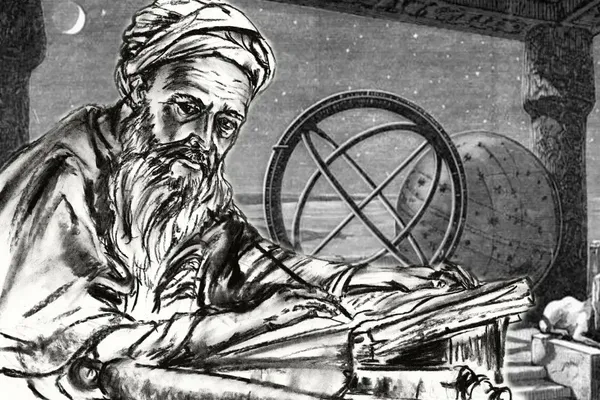
The history of science is replete with the contributions of various civilizations, each adding its unique insights and innovations to the collective knowledge of humanity. Among these, the contributions of Iran, a country with a rich and ancient civilization, stand out for their depth, diversity, and enduring impact. From the time of the Achaemenid Empire to the flourishing of the Islamic Golden Age, and beyond, Iranian scholars, scientists, and thinkers have left an indelible mark on the annals of science.
Ancient Roots
The scientific tradition in Iran has its roots in the ancient Persian Empire. The Achaemenid dynasty, which ruled from the 6th to the 4th century BCE, was known for its advancements in architecture, engineering, and mathematics. The construction of complex structures like palaces and road systems, such as the Royal Road, which facilitated communication across the empire, attests to their engineering prowess.
The Sassanian Era
The Sassanian period (224–651 CE) marked a significant phase in the development of science in Iran. This era saw the establishment of academies and libraries, such as the Academy of Gondeshapur, which became a center for the study of medicine, astronomy, and philosophy. The Sassanians also made advancements in agriculture, metallurgy, and textile production, contributing to the economic prosperity of the region.
The Islamic Golden Age
The advent of Islam in the 7th century and the subsequent establishment of the Islamic caliphate provided a fertile ground for the flourishing of science in Iran. During the Islamic Golden Age, Iranian scholars made groundbreaking contributions across various fields.
Mathematics
Iranian mathematicians played a pivotal role in the development of algebra, trigonometry, and geometry. Al-Khwarizmi, a 9th-century Persian mathematician, is considered the father of algebra. His work on solving linear and quadratic equations laid the foundations for algebra as a separate discipline of mathematics. The term “algorithm” is derived from his name, and “algebra” from the title of his book, “Al-jabr wa’l-muqabala.”
Astronomy
In astronomy, Iranian scholars made significant contributions. Al-Biruni, a polymath from the 11th century, made accurate measurements of the Earth’s circumference and proposed a heliocentric theory centuries before Copernicus. His work in astronomy, mathematics, and geography was unparalleled.
Medicine
Iranian physicians made substantial advancements in medical science. Rhazes (al-Razi), an 9th-century physician, was a pioneer in pediatrics and infectious diseases. His work on smallpox and measles was the first to describe these diseases in detail. Avicenna (Ibn Sina), another towering figure, wrote “The Canon of Medicine,” which became a standard medical text in both the Islamic world and the West for centuries.
Philosophy and Science of Religion
In philosophy, scholars like Avicenna and Al-Farabi made significant contributions to metaphysics, logic, and ethics. Their works were instrumental in the transmission of Greek philosophy to the Islamic world and later to Europe.
Modern Contributions
In the modern era, despite challenges such as political upheavals and international sanctions, Iran has continued to contribute to science. Iranian scientists have made notable contributions in fields such as stem cell research, pharmacology, and nanotechnology. The country has also developed its space program, successfully launching satellites into orbit.
Conclusion
Iran’s contributions to science are a testament to the enduring legacy of its scholars and thinkers. From ancient advancements in engineering and agriculture to groundbreaking discoveries in mathematics, astronomy, and medicine during the Islamic Golden Age, and modern achievements in various scientific fields, Iran has played a crucial role in the development of human knowledge. As the world continues to face complex challenges, the scientific heritage of Iran remains a valuable resource for inspiration and learning.